


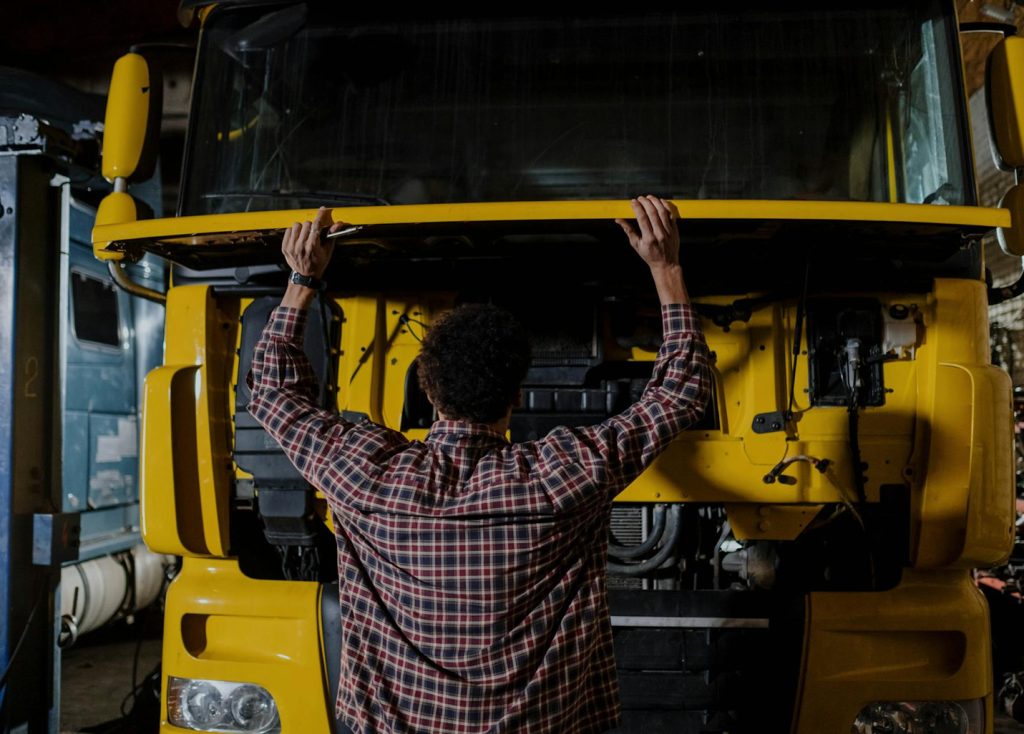
If you run a truck workshop — whether it’s a busy independent garage, a fleet maintenance operation, or a general commercial vehicle repair centre — the diagnostic tools you invest in will shape almost every aspect of how efficiently your team works. And one of the most important decisions you’ll face is this: do you go down the OEM route and use manufacturer-specific diagnostic systems, or do you invest in a single multi-brand platform that covers everything under one roof?
It’s a question worth thinking about carefully. The answer depends on who you are, what you fix, and where you want your workshop to be in five years’ time. This article walks through both approaches honestly, and explains why — for the majority of truck workshops — a multi-brand diagnostic tool is increasingly the smarter choice.
Understanding the Two Approaches
What Is an OEM Diagnostic Tool?
OEM stands for Original Equipment Manufacturer. OEM diagnostic tools are systems developed by — or on behalf of — a specific truck manufacturer to diagnose vehicles from that brand only. Examples include the Volvo VCADS/PTT system, Scania’s SDP3, DELPHI/DAVIE for DAF, eTAS for Iveco, and XENTRY for Mercedes-Benz trucks.
These tools are built to integrate directly with the manufacturer’s engineering data and proprietary systems. When you use an OEM tool on the brand it was designed for, you’re getting full, unrestricted access to every system on the vehicle — exactly as the manufacturer intended.
What Is a Multi-Brand Diagnostic Tool?
A multi-brand diagnostic tool — sometimes called a multi-make or universal heavy vehicle diagnostic system — is a single platform engineered to communicate with trucks from a wide range of manufacturers. Rather than being tied to one brand, it covers dozens of makes across heavy trucks, light commercial vehicles, buses, trailers, and often agricultural or construction equipment too.
Well-known multi-brand truck diagnostic platforms include Jaltest, Delphi DS, Autel Heavy Duty, and Texa. Among these, Jaltest in particular has built a strong reputation in the European heavy truck market for the depth of its manufacturer coverage and the breadth of its special functions — though the wider point here is not about any single product, but about what the multi-brand approach offers as a concept.
The Case for OEM Tools
Before making the case for multi-brand diagnostics, it’s only fair to acknowledge what OEM tools do well — because in the right context, they genuinely are the best option.
Unmatched Depth for a Single Brand
If your workshop exclusively services one brand of truck — a Volvo franchise workshop, for example, or a Scania-authorised service centre — an OEM tool gives you capabilities that no aftermarket system can fully replicate. You get access to the manufacturer’s complete calibration data, the ability to flash ECUs from a blank state, and full integration with brand-specific repair and service systems.
For those workshops, the OEM tool isn’t just a diagnostic device — it’s a core part of the franchise relationship and the service workflow.
Dealer-Level Programming
Certain highly specialised programming tasks — particularly those involving brand-new ECU units being coded from scratch, or proprietary encryption protocols — remain locked to OEM tools by design. Manufacturers do this deliberately, and for this narrow category of work, there is no aftermarket equivalent.
When OEM Makes Sense
The honest summary is this: OEM tools make sense when your workshop is authorised by a single manufacturer, works exclusively on that brand, and needs to perform the full spectrum of programming and calibration tasks at dealer level. If that describes your business, the OEM route is entirely logical.
For everyone else — and that is the majority of truck workshops — the limitations of the OEM approach start to outweigh the advantages very quickly.
The Limitations of Relying on OEM Tools
They Only Work on One Brand
This is the fundamental problem, and it’s an obvious one: an OEM tool for Scania is useless when a MAN rolls in. A Volvo system won’t communicate with a Mercedes-Benz Actros. An Iveco tool won’t help you with a DAF.
For any workshop that sees mixed traffic — which is the reality for the vast majority of independent garages and fleet maintenance operations — this means either turning vehicles away or buying multiple OEM systems. Neither outcome is acceptable in a competitive, commercially pressured environment.
Multiple OEM Tools Means Multiple Costs
If you were to try to cover the most common truck brands with OEM systems, the financial reality becomes stark very quickly. Each OEM diagnostic licence carries its own purchase cost, its own annual subscription fee, its own hardware requirements, and its own update schedule. Stack three or four of those together and you’re looking at a significant ongoing overhead — both in financial terms and in the administrative burden of managing multiple contracts, renewals, and software versions simultaneously.
And that’s before you consider the less common makes. A workshop might see a Renault Trucks once a fortnight and an Isuzu once a month — not frequently enough to justify a dedicated OEM subscription for each, but regularly enough that you can’t simply decline the work.
Multiple Tools Means Multiple Learning Curves
Every OEM diagnostic system has its own interface, its own menu structure, its own terminology, and its own quirks. Technicians who move between several OEM platforms each day face constant context switching — remembering which system uses which workflow, where to find particular functions on each interface, and which tool they need to grab from the shelf for each job.
This isn’t just a minor inconvenience. It slows jobs down, increases the likelihood of errors, and makes it harder to bring new technicians up to speed. Training somebody to be competent across three or four separate OEM platforms takes considerably longer than training them on a single system.
The Multi-Brand Advantage: One Tool, Every Truck
Complete Workshop Coverage in a Single System
The most compelling argument for a multi-brand diagnostic tool is the simplest one: it works on everything. One device, one interface, one licence — and you can connect to a Volvo FH, a Scania S-Series, a Mercedes-Benz Actros, a DAF XF, a MAN TGX, a Renault Trucks T, a Freightliner, and a Hino without reaching for a different tool or switching systems.
For a workshop that sees mixed traffic — which, again, describes most independent repairers — this is transformative. No job needs to be declined on the basis that you don’t have the right diagnostic system. No customer needs to be redirected to a main dealer simply because you lack coverage for their make.
The best multi-brand platforms cover not just the major European and American truck brands, but also bus and coach manufacturers, light commercial vehicles, semi-trailer systems, and increasingly agricultural and construction machinery. For diversified workshops, that breadth of coverage is enormously valuable.
Significant Cost Savings Over Time
The financial case for multi-brand diagnostics is compelling when you look at the total cost over a realistic ownership period.
A single multi-brand diagnostic platform — even at the premium end of the market — will typically cost less annually than the combined subscription fees for three or four OEM systems. When you factor in the hardware savings (one device rather than multiple), the reduction in administrative overhead, and the elimination of per-function unlock fees that some OEM systems charge, the long-term cost advantage of the multi-brand approach becomes very clear.
There’s also the question of opportunity cost. A workshop limited to one or two OEM systems turns away — or refers out — work it could otherwise handle. Every job that leaves your bay because you lack the diagnostic coverage is revenue lost. A multi-brand tool converts those jobs into billable work.
One Tool That Your Team Can Master
Perhaps the most underappreciated advantage of a multi-brand diagnostic tool is what it does for your team’s expertise and efficiency.
When every vehicle — regardless of make — is diagnosed through the same platform, your technicians build deep familiarity with a single system. They learn its logic, its layout, its shortcuts. They know exactly where to find the functions they need without hesitation. They develop confidence and speed that simply isn’t possible when their attention is divided across multiple different OEM interfaces.
This has a meaningful impact on diagnostic quality. A technician who truly knows their tool will work faster, make fewer navigation errors, and be more thorough in their testing. A technician who uses three different OEM systems intermittently — each one only when the relevant brand comes in — will never achieve that level of fluency with any of them.
It also simplifies hiring and training. When you take on a new technician, you’re training them on one system. When you want to develop a junior’s skills, the path is clear. The institutional knowledge your team builds around a single platform becomes a genuine asset to the business.
Consistent Workflow Across Every Job
Multi-brand tools standardise the diagnostic workflow across your entire workshop. The process for connecting to a vehicle, identifying it, reading faults, running tests, and generating a report follows the same pattern whether the vehicle is a Scania or a Kenworth.
This consistency is valuable for quality control. It’s easier to implement and enforce a standard diagnostic process when everyone is working from the same tool and the same workflow. It reduces the risk of steps being skipped or tests being overlooked because the technician isn’t fully familiar with a particular OEM system’s menu structure.
Where Multi-Brand Tools Have Narrowed the Gap
One of the most significant developments in the diagnostic tools market over the past decade is how substantially multi-brand platforms have closed the gap on OEM depth. The early criticism of aftermarket multi-brand tools — that they were superficial, offering little more than generic fault code reading — is increasingly difficult to sustain against modern platforms.
Today’s leading multi-brand tools offer:
- Genuine manufacturer-level fault code reading and clearing across all major ECUs
- Live data monitoring with the full parameter sets that workshops actually need
- Forced DPF regeneration, SCR system testing, and full aftertreatment diagnostics
- Injector coding and calibration procedures
- Gearbox and clutch adaptation routines
- Air suspension calibration
- ECU parameter programming
- Guided diagnostic workflows for complex fault-finding
For the broad majority of truck repair work — which is what most workshops are doing most of the time — a quality multi-brand tool delivers everything required. The scenarios where only an OEM tool will do are real, but they are the exception, not the rule.
The Hybrid Reality: Multi-Brand as Your Foundation
For most workshops, the most pragmatic approach is to treat a multi-brand diagnostic tool as the foundation of the workshop’s diagnostic capability — the system that handles the full range of day-to-day work across all makes — while acknowledging that a small number of highly specialised OEM jobs may occasionally still need to go to a main dealer.
This is not a weakness of the multi-brand approach; it’s simply a sensible division of labour. A workshop with a quality multi-brand platform can handle the vast majority of diagnostic and programming work in-house, retaining revenue and building expertise, while the very narrow category of tasks that genuinely require OEM-level dealer access remains the exception rather than the regular occurrence it would be without multi-brand coverage.
For workshops that predominantly service one brand — but occasionally see other makes — a multi-brand tool offers an excellent complement to an OEM system, covering the gaps without duplicating costs. For workshops with genuinely mixed traffic and no single-brand bias, a multi-brand tool as the primary diagnostic investment is usually the clearest choice.
Making the Decision for Your Workshop
A few honest questions to guide your thinking:
Do you service trucks from multiple manufacturers? If yes, a multi-brand tool is almost certainly the right primary investment. The coverage, cost, and workflow advantages over maintaining multiple OEM subscriptions are substantial.
Are you a franchised or authorised dealer for a single brand? If you operate as part of a manufacturer’s dealer network and your workshop traffic is overwhelmingly one make, an OEM tool is likely a requirement of that relationship, and its depth of coverage will be appropriate for your context.
How much do you value your technicians’ time? If the answer is “a great deal” — and it should be — then the workflow efficiency and expertise-building benefits of a single multi-brand platform have real commercial value that deserves to be part of the calculation.
How important is cost predictability? Multi-brand tools offer straightforward, consolidated licensing. OEM systems, especially across multiple brands, can involve complex, variable cost structures that are harder to budget for.
Conclusion
OEM diagnostic tools have their place. For authorised dealer workshops operating within a single manufacturer’s ecosystem, they remain the appropriate choice — and no aftermarket tool will fully replicate everything they offer for that specific brand.
But for the independent workshop, the fleet maintenance operation, and the general commercial vehicle repairer — the businesses that form the backbone of the truck servicing industry — the multi-brand diagnostic tool has become the smarter, more commercially sound, and more practical choice.
The ability to cover every make with a single investment, the cost savings against maintaining multiple OEM subscriptions, the diagnostic depth that modern platforms now deliver, and above all the operational advantage of a team that truly masters one tool and applies that expertise to every vehicle that comes through the door: these are compelling advantages that are difficult to argue against.
The truck diagnostic market now offers multi-brand platforms of genuine quality — Jaltest among them — that have made this decision easier than it has ever been. For most workshops, the question is no longer whether a multi-brand tool is good enough. It’s why you’d choose anything else.